Product Updates

Blog

Updates, deep-dives, and insights from the Neurelect team.

New List Filters and Sorting

New List Filters and Sorting

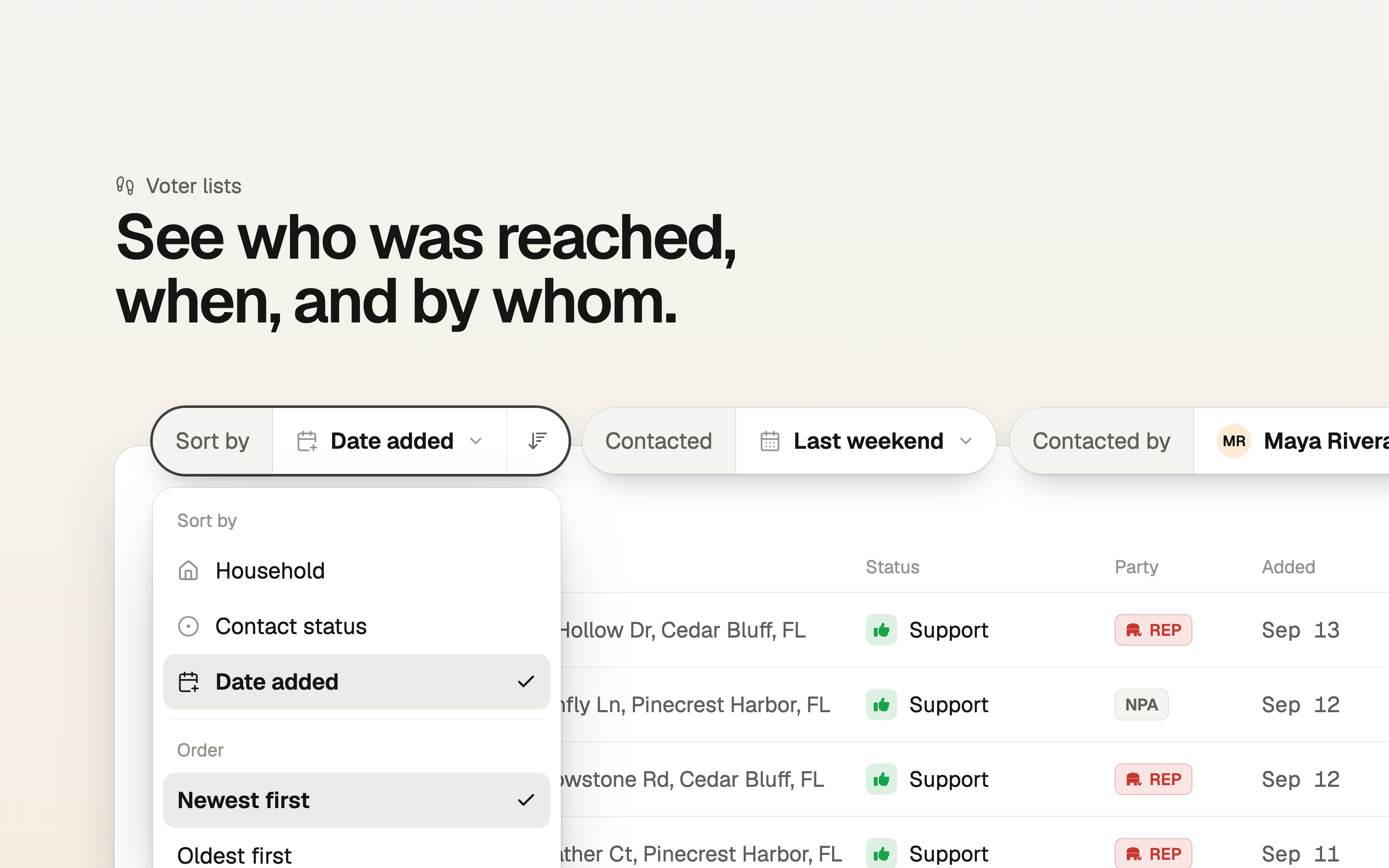
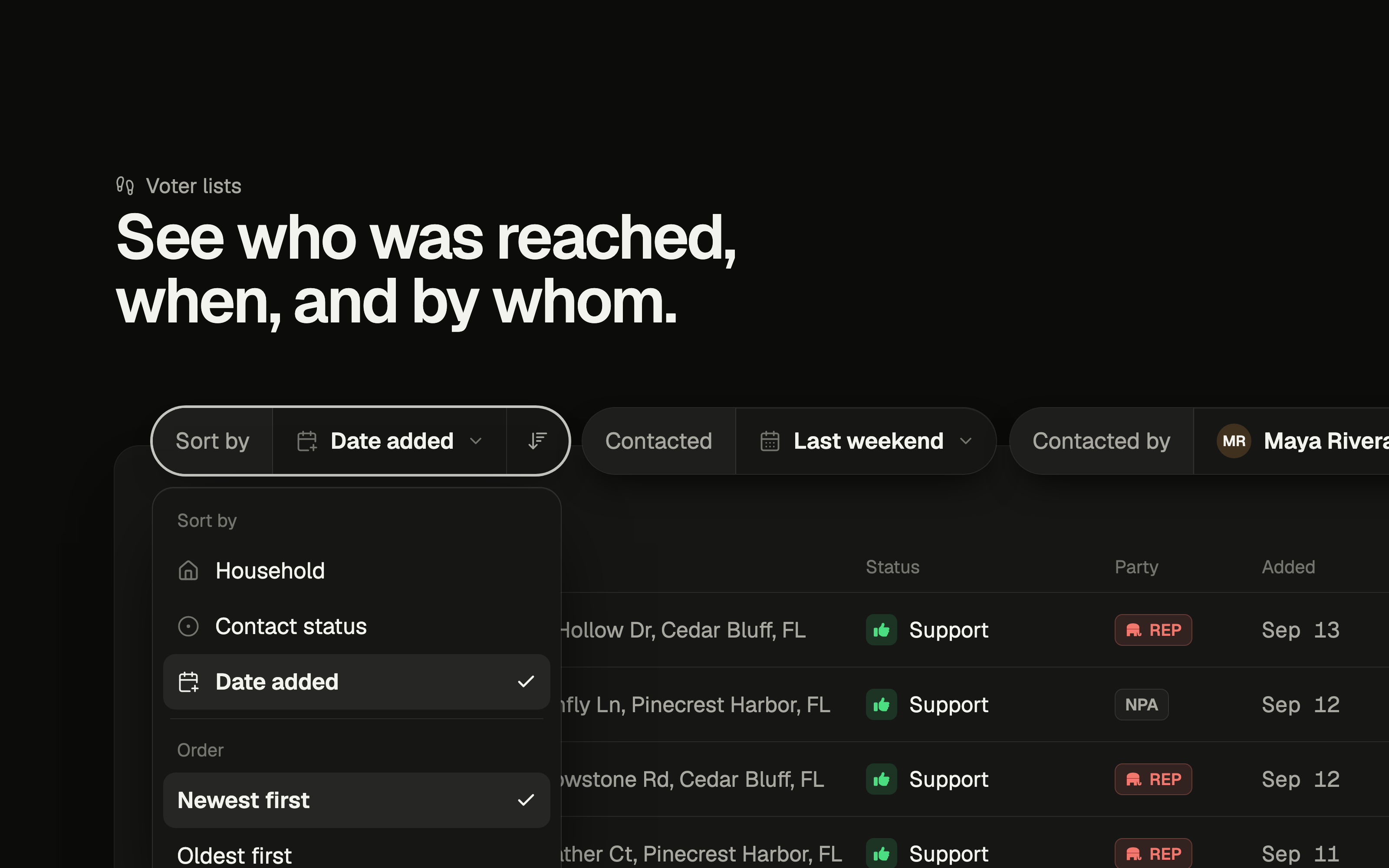
Voter lists now answer the questions campaigns ask every day: who's new, who still needs a knock, who a volunteer reached, and what happened on Saturday. Four controls sit above every list, and they work together. Four controls, any combination Sort by household, contact status, or date added, newest or oldest first. Status narrows to supporters, opposed, undecided, not home, or voters nobody has reached yet. Contacted picks a date range from a calendar, or a shortcut like Yesterday, Last weekend, or Last 7 days. Contacted by narrows to doors a single teammate logged. Start typing a name to find them. Put them to work See the newest yard sign requests Yard sign lists now open with Sort by: Date added, Newest first, so the latest requests are always at the top. Hover a date to see who added the voter, and flip the order to work through the oldest requests first. Find voters you still need to reach Set Status: Not contacted and Sort by: Household. What's left is every door without a result, grouped by address so a canvasser can clear a whole house in one stop. Check in on a volunteer Choose a teammate under Contacted by and set Contacted: Last 7 days. You'll see every door they logged this week. Add Status: Support to see the supporters they found. Pull up everyone from one walk day Open Contacted, pick the day you walked on the calendar, and apply. Every voter reached that day is on screen. Add Status: Support to get a thank-you list, or Not home to plan a second pass. Share the exact view The page link now carries your sort and filters. Copy it from the address bar and a teammate opens the same list, already filtered. Export what you see Exports follow your filters. The export dialog lists the status, contact date, and teammate filters it will apply, so the CSV holds exactly the voters on screen.

Read
Introducing Auto Turf

Introducing Auto Turf

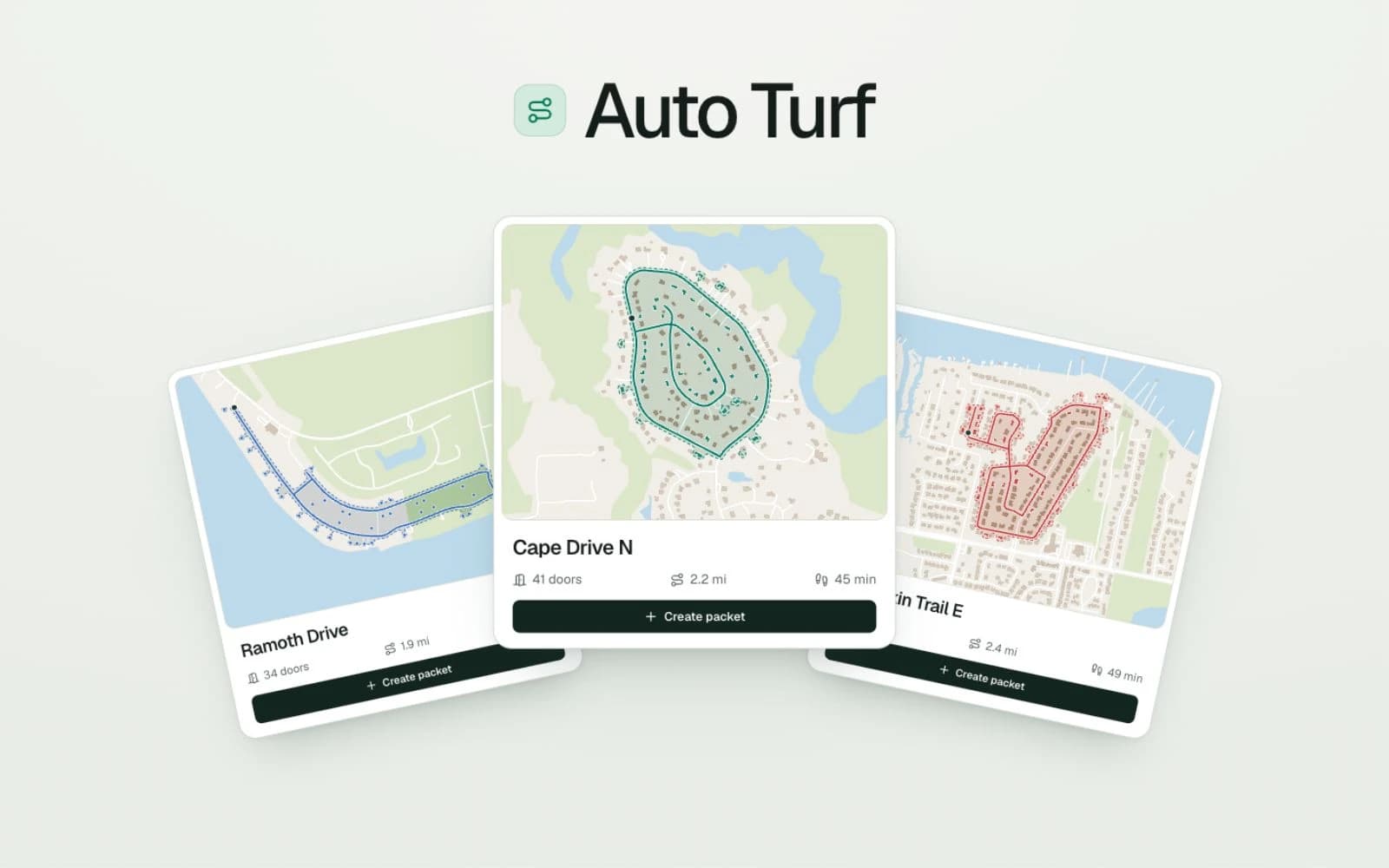
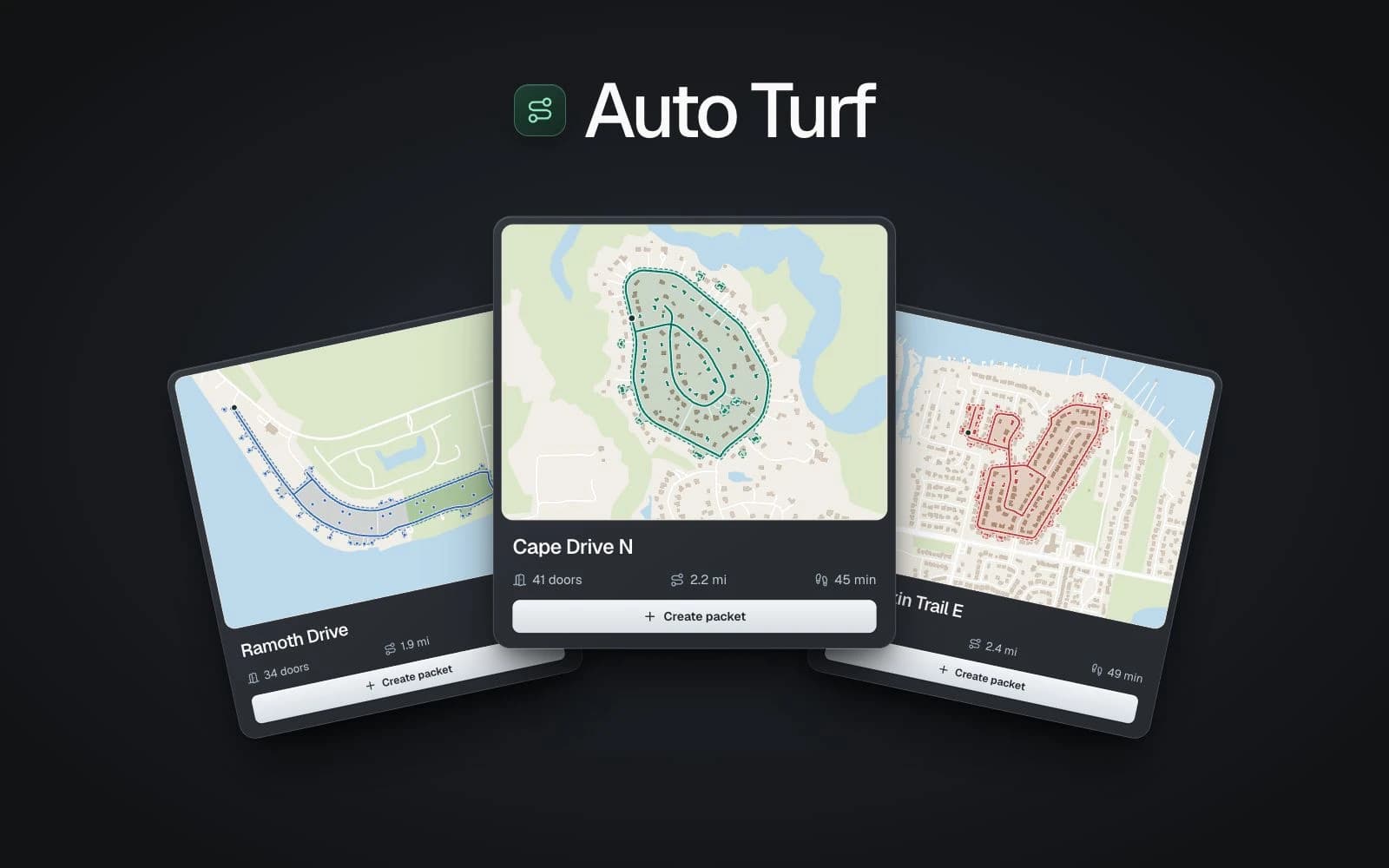
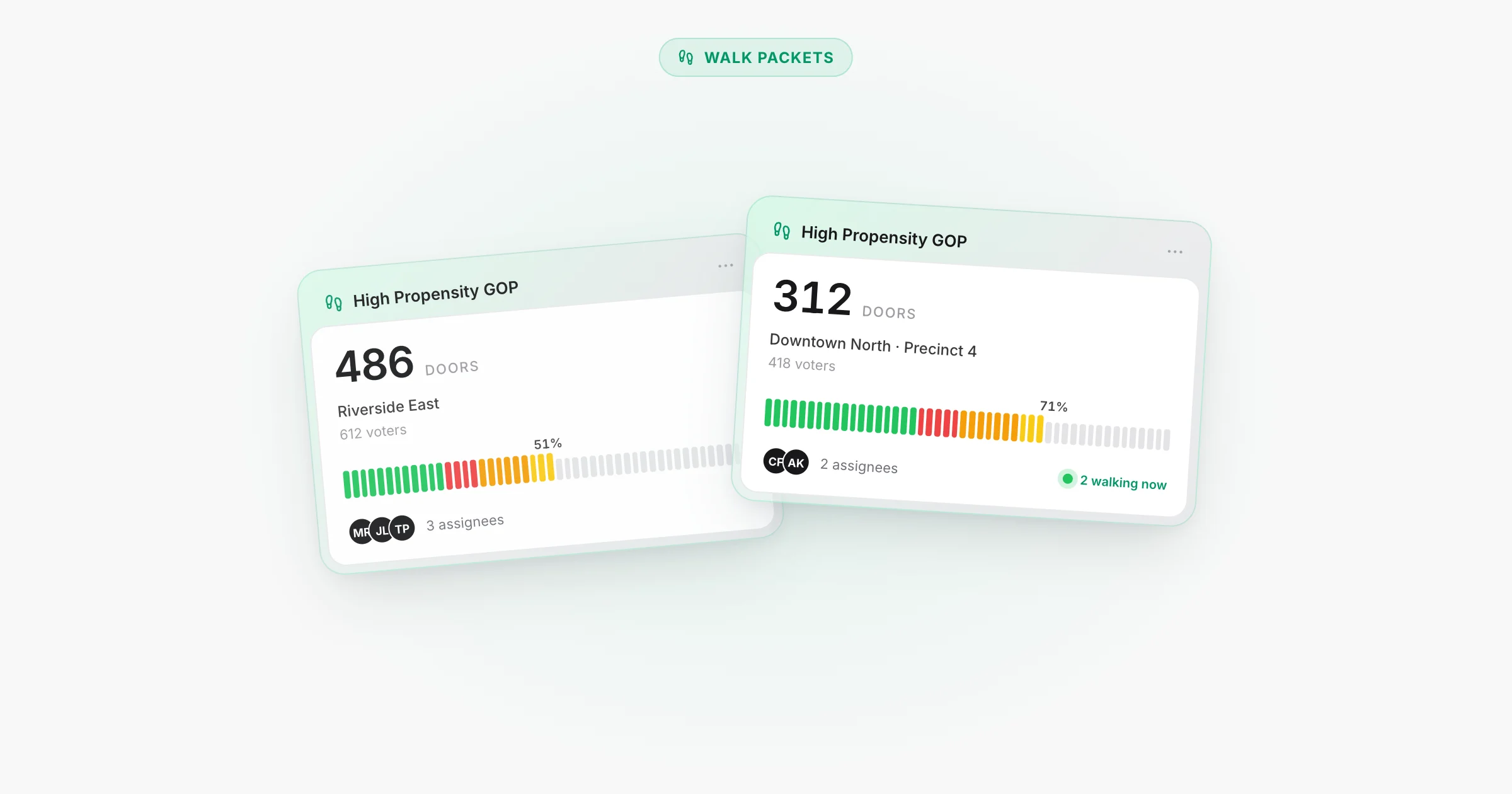
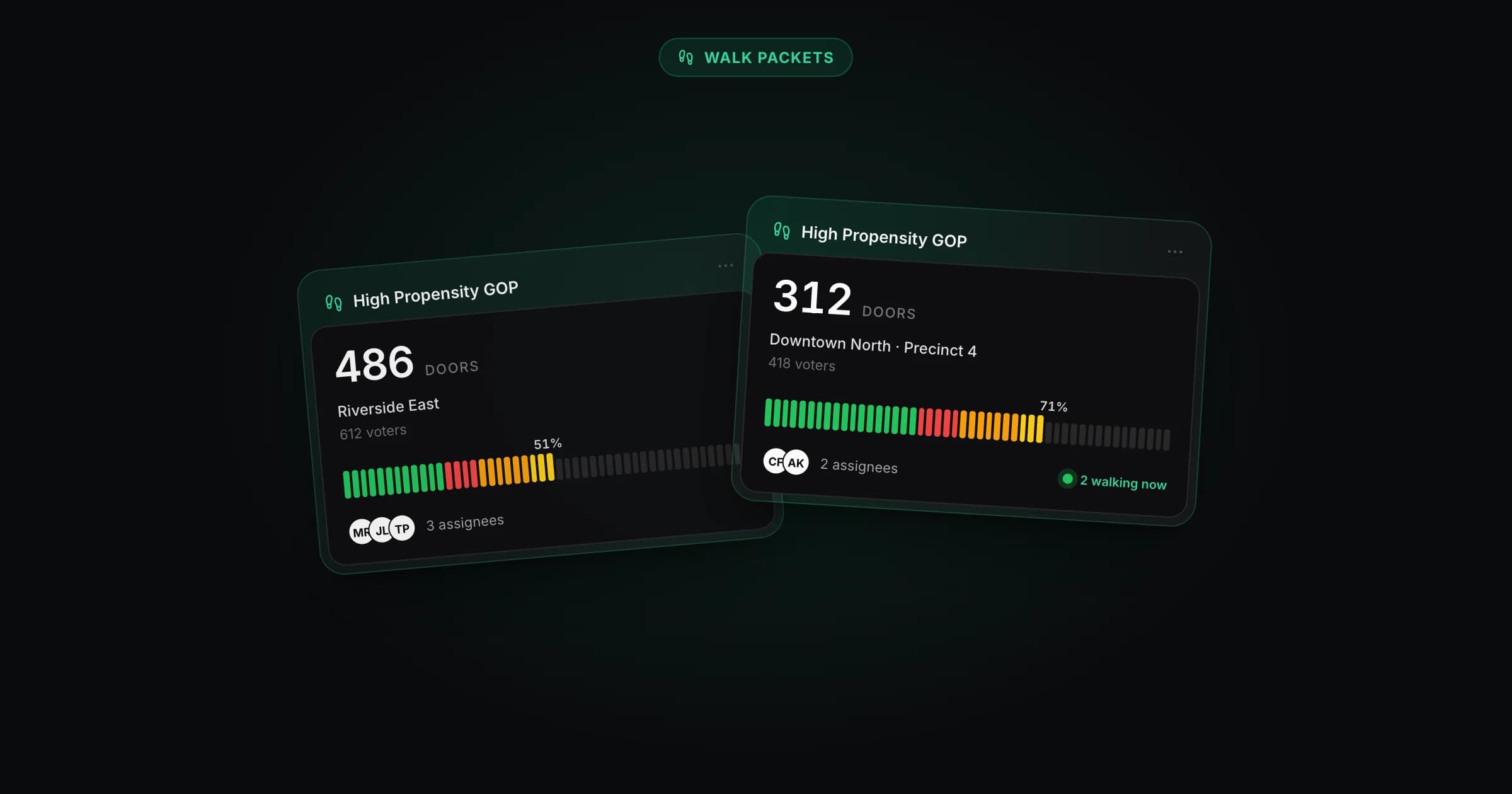
We're excited to introduce Auto Turf, one of the features we've been most looking forward to sharing. Turf cutting is one of the hardest parts of getting a campaign ready to knock doors. You can know exactly which voters you want to reach and still spend hours figuring out how to divide them into walks. Houses that look close together can sit on disconnected streets. A creek, a busy road, or a neighborhood with one entrance can turn a small area on the map into a much longer afternoon. Auto Turf helps with that work. It uses your voter list, street connections, and neighborhood boundaries to suggest walk packets for your team. Each suggestion includes a map, a door count, and an estimated walking time for a route that returns to its starting point. Open Walk Packets on any voter list to see the suggestions. Preview a route, inspect the stops, and create a packet when it looks right. You can then assign volunteers and get ready to head out. Suggestions also account for voters already assigned to packets across your campaign. As your team creates packets, overlapping lists refresh to keep those voters out of the remaining suggestions. You still bring the local knowledge. Our goal is to give you a useful starting point and more time to spend talking with voters. Walking time excludes door approaches and conversations. Review local access before sending your team out, and allow time for those visits. See Create a packet from a suggested walk for the full workflow.

Read
How Political Campaigns Are Using AI to Win Local Races

How Political Campaigns Are Using AI to Win Local Races

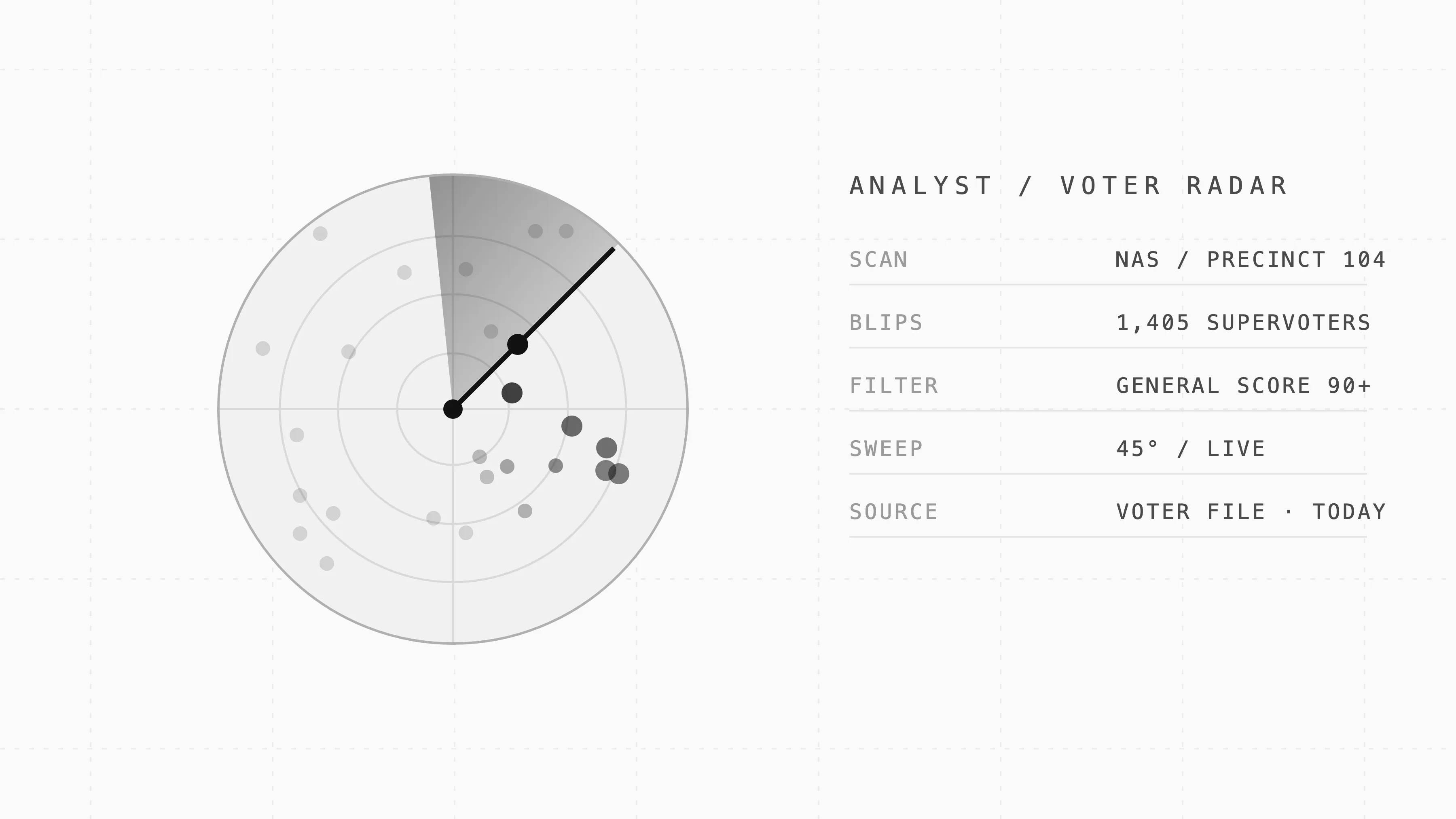
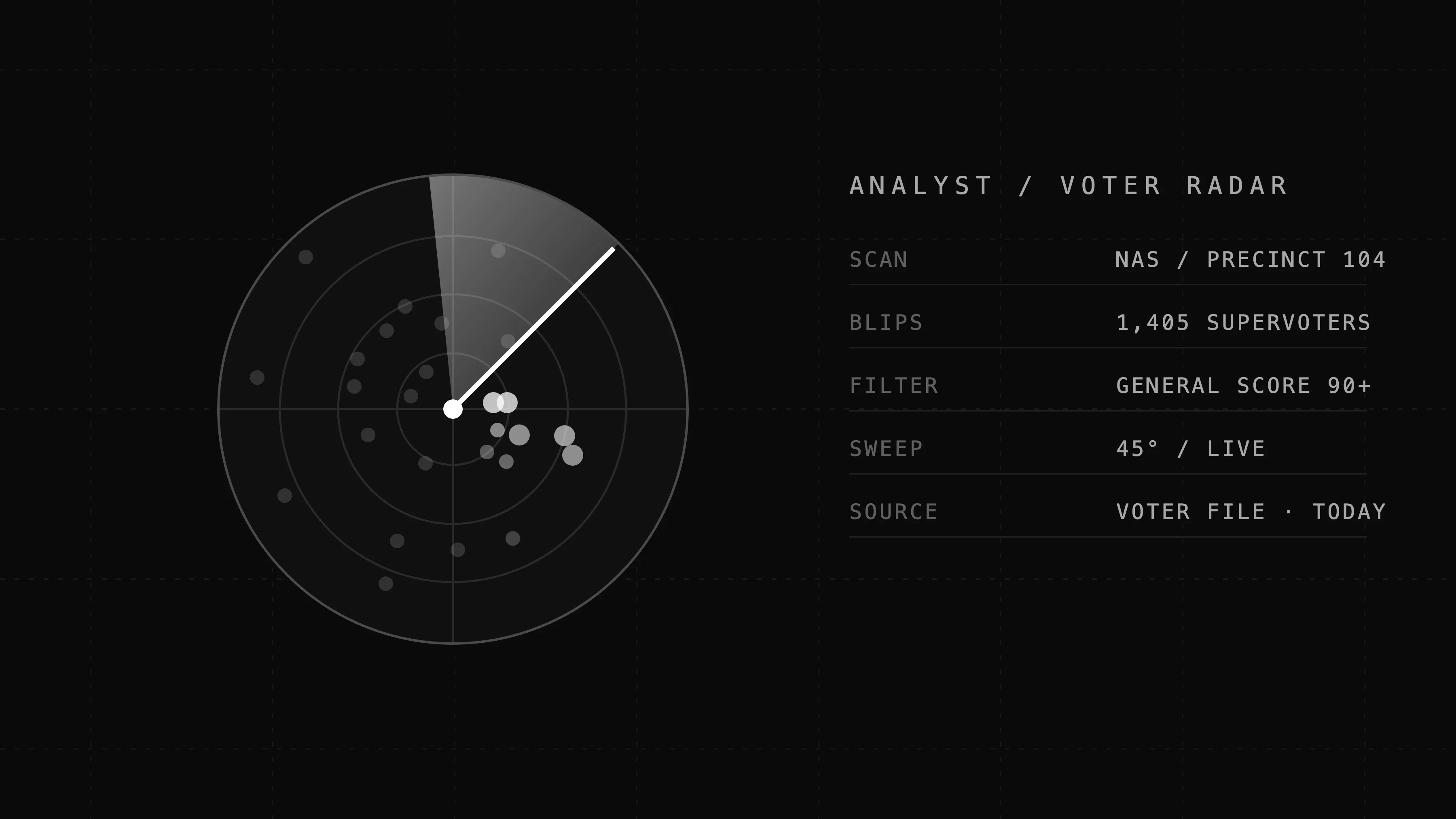
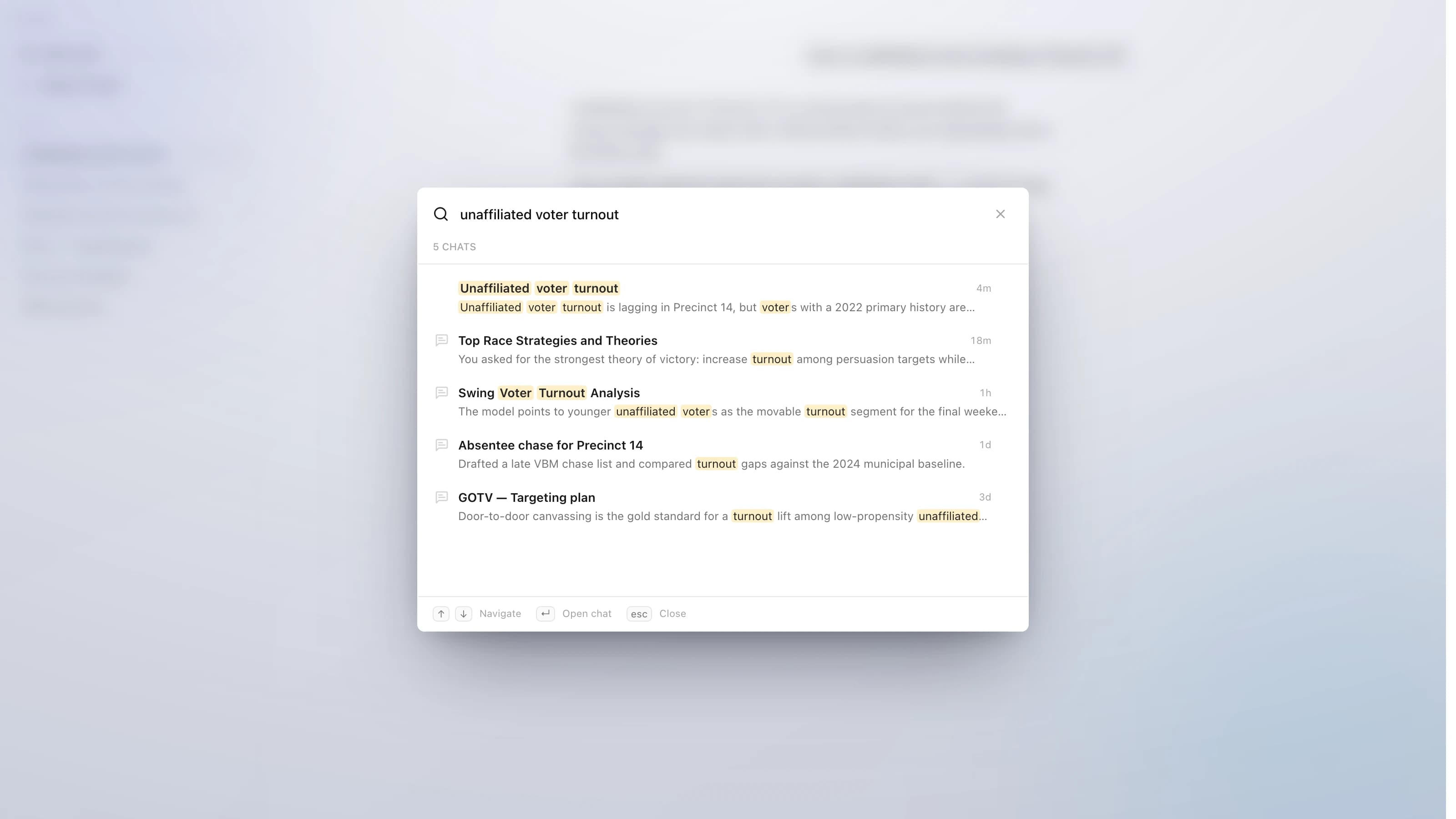
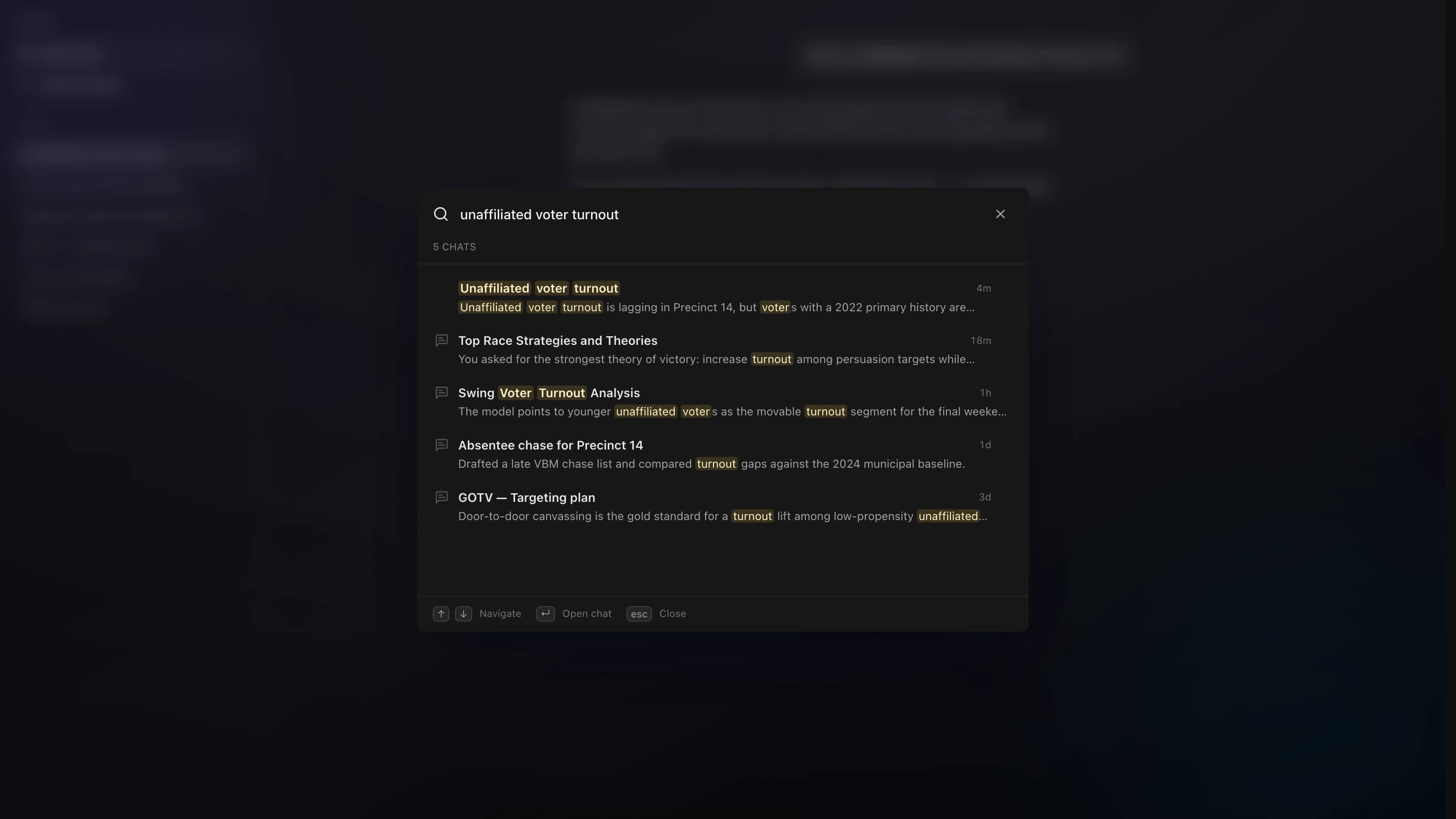
For the 2026 cycle, we envisioned a new way of campaigning: the manual work that candidates and consultants have always done by hand, done instead by an AI agent. So we built Analyst, the first agent of its kind for political campaigns, a helpful peer you can ask about voters, precincts, and strategy the way you would ask a sharp staffer. What we did not expect was how quickly users would adopt it, and how much they would love it. The agent has become the busiest part of Neurelect. For many of our users, this is one of their first experiences with AI agents, extremely smart AI that is actually able to take actions and do real work, not just answer questions. Given the choice between clicking through screens and simply asking for what they need, users ask. A voter list that used to mean hours of manual work is done in the time it takes to type the question, and expert advice is a follow-up message away. Campaigns build lists mid-meeting, plan walk routes the morning of a canvass, and stress-test strategy over coffee. These are some of our favorite stories users have shared with us about how they put it to work. Voter lists in one sentence One list idea keeps coming up. Users in several counties each arrived at it on their own: "Unaffiliated voters with two or more super-Republicans in the household. Create a list." An independent voter who lives with two loyal partisans is worth talking to. Before a closed primary, they might even switch parties. That's an idea a national firm would be proud of, and volunteers came up with it. Others got creative in different ways. One built a list of frequent voters who live on golf courses to invite to a tournament fundraiser. Several campaigns found the same play after Florida's mail ballot requests expired: find your loyal mail voters who never renewed, and remind them. During one special election, a user checked ballot returns every day and built call lists of ballots not yet returned, running a full turnout operation through a…

Read
We Taught Analyst to Think Like a Strategist

We Taught Analyst to Think Like a Strategist

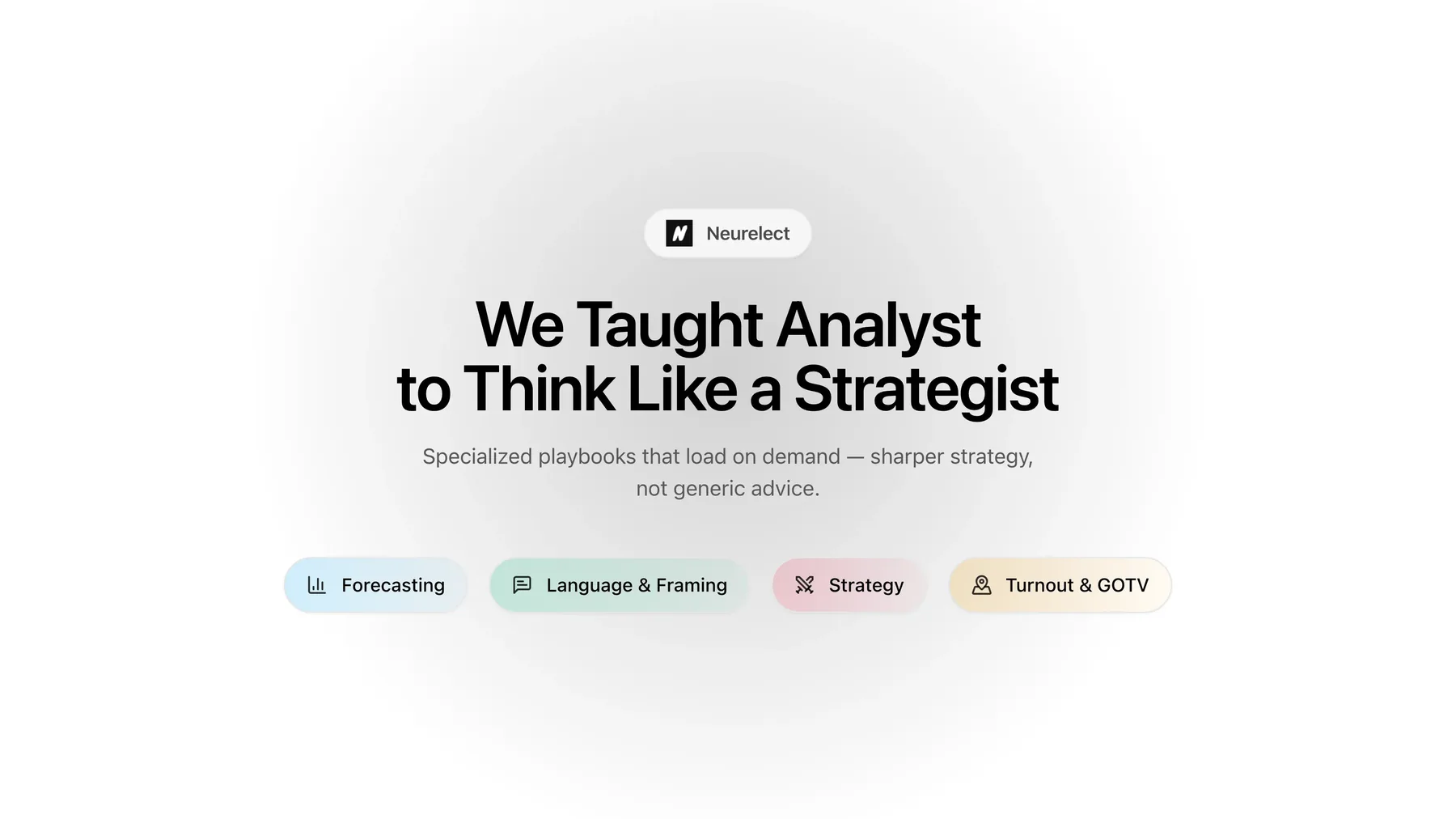
Every campaign faces the same problem: there's too much to know. Game theory, polling methodology, coalition dynamics, field experiments, message testing—it's scattered across research and locked in the heads of expensive consultants. We built Analyst to fix that. Today we're releasing five strategic intelligence modules that bring elite-level campaign thinking directly into your workflow. What's Under the Hood | Signal | What it includes | | ------------------------ | ---------------------------------- | | 2,500 years | of strategic thinking distilled | | 100+ experiments | on what actually moves voters | | 1,000+ focus groups | on what language lands | | 190+ countries | of political power dynamics mapped | | 50+ campaign cycles | of hard-won practitioner wisdom | | Billions in ad spend | guided by these principles | The Skills Strategy & Opposition Competitive positioning and adversarial thinking. When to engage and when to wait. Whether they're bluffing or serious. Where they're vulnerable. How to read their moves before they make them. How to force them into bad positions without overextending yourself. Forecasting & Uncertainty Probabilistic thinking and calibration discipline. Is that poll shift real or just noise? How confident should you actually be? When to update your beliefs and when to hold steady. What models can tell you—and the honest limits of what they can't. Incentives & Coalitions The logic of political survival. Who does a politician actually answer to? Why do insiders always seem to win? Which of their supporters might be gettable? How coalitions hold together—and what makes them fall apart. Turnout & Field Operations Evidence-based GOTV. Which tactics actually produce votes and which are a waste of money. Who to target for maximum impact. What's realistic given your volunteers and geography. And why you should never trust a vendor's promises without seeing the proof. Language & Framing Message crafting and late-cycle discipline. How to make co…

Read
Neurelect Launched AI-Powered Elections Intelligence Platform

Neurelect Launched AI-Powered Elections Intelligence Platform

Nassau County, Florida - Neurelect today announced the launch of its AI-driven elections intelligence platform designed to give campaigns, policymakers, and civic organizations a clearer, more actionable understanding of voters, issues, and community sentiment. Neurelect was co-founded by Joe Zimmerman, veteran Republican political consultant and web developer, and Caleb Fahlgren, lead technologist and AI engineer. Replacing Outdated Tools with Real-Time Insight The platform blends artificial intelligence, enriched public data, and modern field tools to replace outdated polling and static voter files with real-time, decision-ready insight. Zimmerman has operated Zimmerman Group, a technology and public affairs company since 2015, supporting political campaigns and organizations with digital strategy, messaging, and voter outreach. That campaign-level experience directly informed Neurelect's focus on usability, speed, and practical application in real elections. "Campaigns are still relying on fragmented tools and intuition when better technology already exists," said Zimmerman, co-founder of Neurelect. "Neurelect was built from the ground up to give campaigns and civic leaders real insight into what voters actually care about — quickly, affordably, and transparently. I want to see conservative campaigns powered by 21st century technology and insights." AI-Assisted Analysis Engine At the core of Neurelect is an AI-assisted analysis engine that allows users to interact with voter and survey data using natural language. The engine enables campaigns to generate targeted lists, explore voter segments, and surface trends without requiring technical expertise. Neurelect goes beyond traditional voter files by incorporating enriched public data and contextual information, giving users deeper insight into the makeup of their electorate. Interactive district and precinct-level visualization tools allow campaigns to see voter density, turnout history, and geographic patterns at…

Read