

How Political Campaigns Are Using AI to Win Local Races
Real stories of candidates using an AI agent for voter targeting, campaign strategy, and field operations.
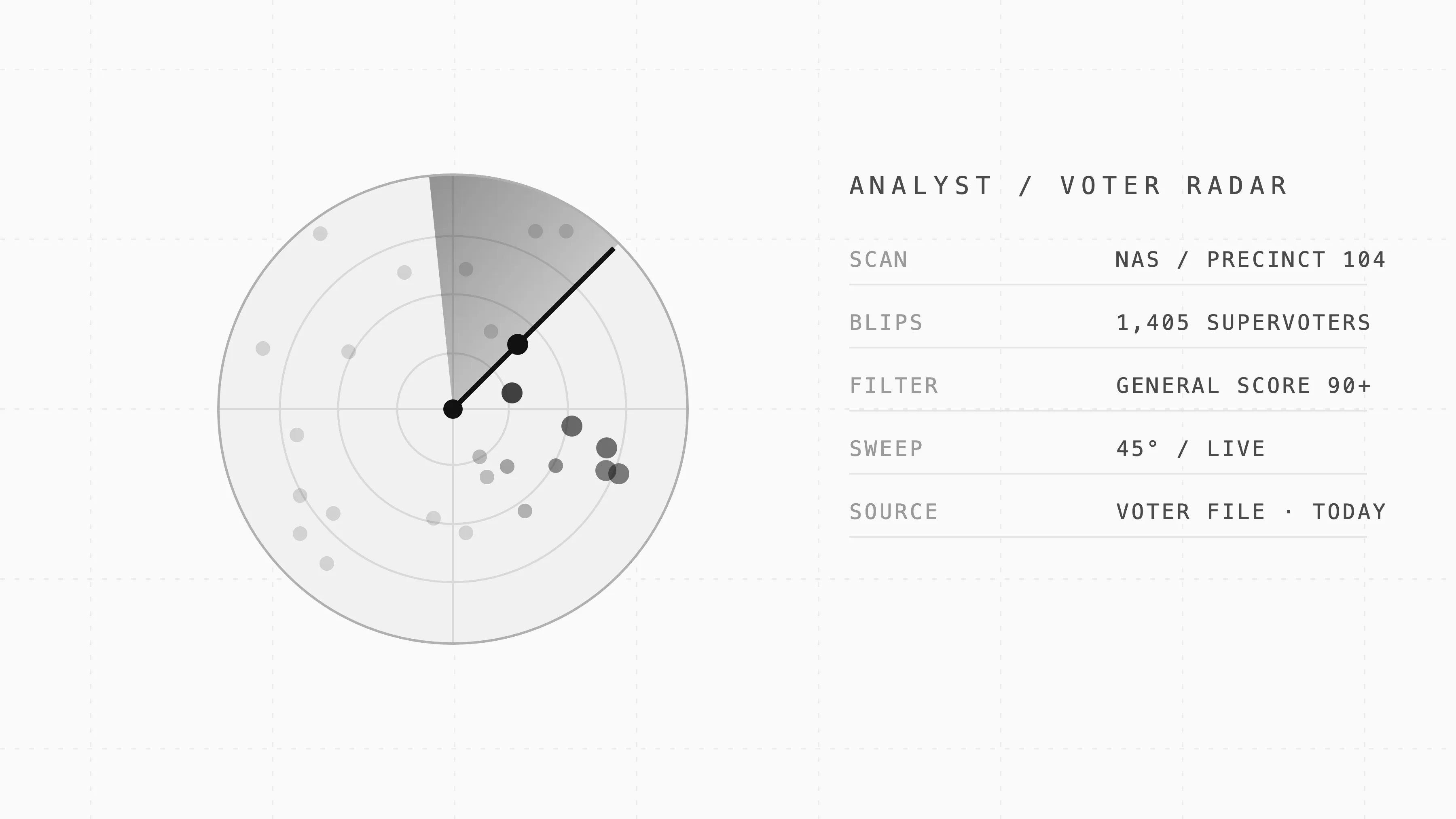
For the 2026 cycle, we envisioned a new way of campaigning: the manual work that candidates and consultants have always done by hand, done instead by an AI agent. So we built Analyst, the first agent of its kind for political campaigns, a helpful peer you can ask about voters, precincts, and strategy the way you would ask a sharp staffer. What we did not expect was how quickly users would adopt it, and how much they would love it. The agent has become the busiest part of Neurelect.
For many of our users, this is one of their first experiences with AI agents, extremely smart AI that is actually able to take actions and do real work, not just answer questions. Given the choice between clicking through screens and simply asking for what they need, users ask. A voter list that used to mean hours of manual work is done in the time it takes to type the question, and expert advice is a follow-up message away. Campaigns build lists mid-meeting, plan walk routes the morning of a canvass, and stress-test strategy over coffee. These are some of our favorite stories users have shared with us about how they put it to work.
Voter lists in one sentence
One list idea keeps coming up. Users in several counties each arrived at it on their own:
"Unaffiliated voters with two or more super-Republicans in the household. Create a list."
An independent voter who lives with two loyal partisans is worth talking to. Before a closed primary, they might even switch parties. That's an idea a national firm would be proud of, and volunteers came up with it.
Others got creative in different ways. One built a list of frequent voters who live on golf courses to invite to a tournament fundraiser. Several campaigns found the same play after Florida's mail ballot requests expired: find your loyal mail voters who never renewed, and remind them. During one special election, a user checked ballot returns every day and built call lists of ballots not yet returned, running a full turnout operation through a chat window.
The math behind winning and losing
One campaign veteran told us about spending an evening digging into a lost judicial race. How many voters skipped that race on their ballot? How many crossed over to the other party? Which precincts fell short, and where should the next campaign focus? Work like this used to be a specialty report from a consultant.
The forward-looking version comes up all the time:
"Give me a path to victory if turnout looks like this: Republicans 60%, Democrats 58%, independents 40%."
Yard signs, picked by data
One volunteer told us how they worked street by street. They asked the agent for supportive voters on a specific avenue, pulled phone numbers so they could call and ask permission, and even found a friendly business owner on a busy corner who might host a sign. Yard sign placement is usually gut feel and driving around. This time the voter file did the work, and we loved seeing it. Another user split a walk list into routes of fifty nearby homes, then checked in each morning: "Which walk sheet should I start with today?"
Small campaigns run everything on it
For many small campaigns, the agent is not one tool in the stack. It is the stack. One county party organization runs its research, social posts, meeting minutes, donor outreach, and turnout planning through it. Users tell us why: it is faster than doing the work by hand, there is no new software to learn, and it bends to whatever the day needs. The same conversation can pull a list, write the mailer for it, and plan the walk route.
A consultant for races that never had one
School board, port authority, town council: races where a paid consultant was never in the budget. One school board member ran the whole arc of a campaign in a single conversation. Should I fundraise? When do I start knocking doors? How many votes do I need? Which neighborhood first? A script for the doors. A budget based on what past candidates spent. And yes, what to wear while canvassing.
One user simply gave the analyst a name. Their sessions open: "Alfred, tell me the demographics to win this district, and why you chose what you did."
Local races decide school budgets, sheriff budgets, and property taxes, and they've always been run with the least information. The judgment still belongs to the candidate. But the math is handled now, and for the first time, a local campaign can afford its own analyst.
Using Neurelect in a way we haven't seen? We'd love to hear about it. Tell us.